Local Man Declares Himself Artist After Buying Weird Lamp
A retail transaction becomes a movement. The living room will never recover.
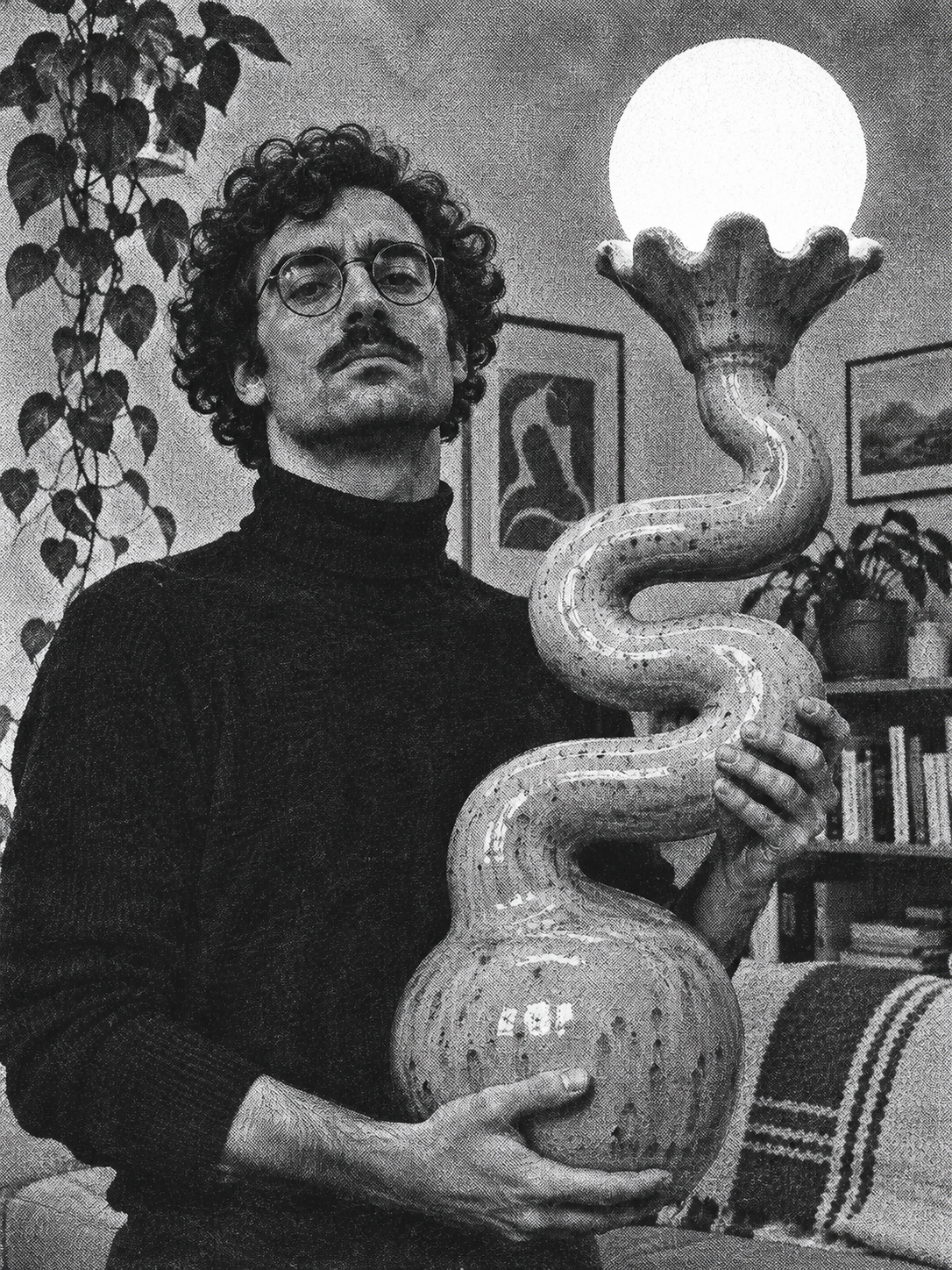
At 4:17 on a perfectly serviceable afternoon, Martin Pell stopped being a man with a lamp and became an artist with a practice. The distinction, he explained to nobody in particular, was chiefly a matter of where he stood in relation to the lamp.
Previously he had stood beside it, checking whether the cord would reach. Now he stood slightly behind it, looking grave.
The object responsible for this development resembles a swan attempting to remember a password. Its ceramic body folds back on itself three times before arriving at a globe that, when switched on, illuminates a small area of the room. Pell considers this last feature incidental.
“People get caught up in whether it lights things,” he said in a statement drafted on his phone. “That’s a very utility-led way of encountering the work.”
The work had been encountered at a home goods shop, between a decorative ladder and a bowl that could not be used for food. Pell initially hesitated over the price. He now describes that hesitation as the first stage of his resistance to institutional valuation.
By evening, the receipt had been placed in a folder marked Provenance. The cardboard box remained in the hall, pending a decision on whether it constituted an archive.
Pell has not made the lamp. He is refreshingly clear about this. Making things, he believes, is only one of several ways to participate in the larger conversation around things. Other ways include buying them, moving them six inches to the left, and asking a visitor what they notice first.
His friend Nina noticed that the room was darker than before.
“That’s interesting,” Pell replied, writing nothing down with considerable emphasis.
The transformation has already affected the apartment’s internal geography. The corner formerly occupied by a laundry basket is now a site. The chair beside it is a point of departure. The laundry itself has been moved into the bedroom, where it continues to explore accumulation without institutional support.
Pell’s first planned exhibition will consist of inviting four people over for pasta and leaving the lamp on. There will be no formal opening time, because he dislikes the pressure that schedules place on an encounter. There will, however, be a firm departure time, because he has a call in the morning.
An accompanying wall text is in preparation. The current draft begins with the word “interrogates” and is already too long for the wall.
Asked what the lamp interrogates, Pell considered the question for some time. He eventually suggested domesticity, although he was willing to include memory if the first answer seemed narrow. The lamp, which has two brightness settings, declined to establish a position.
There is something touching about his conversion. A person has found an object that makes his ordinary room feel briefly unfamiliar. That is a real pleasure, even if he has chosen to express it in the language of a funding application.
For now, Pell is withholding a title. He feels the work needs room to become itself. He has nevertheless updated his biography to include the phrase “working at the intersection.”
The intersection is between the sofa and the outlet. Visitors are asked not to trip over it.